
Live Longer: Own A Racehorse
January 3rd, 2002by Jude T. Feld
Ponce de Leon spent years sailing around Florida searching for “the fountain of youth.” Little did he know that it could have been found at Gulfstream Park or Calder Race Course.
Thoroughbred racing lost some of its biggest patrons this year, but it amazed me as I searched through the Blood-Horse archives, how long racehorse owners live. It makes you want to throw out the Atkins diet book and your treadmill and opt instead for a Keeneland sale catalog and a Turf Club table at Santa Anita.
Philanthropist Alice duPont Mills died on March 13 of this year. She was 89.
Believe It, Devil’s Bag and Gone West had all competed in her colors. She was Virginia’s outstanding owner-breeder in 1991.
“Oh, she was rich and had an easy life,” you say.
Well, Mills was an accomplished pilot. She flew an open-cockpit plane up the Amazon River in 1932 and served in New York as a flight instructor for World War II pilots.
Being a woman flight instructor in the 1940s doesn’t sound so cushy to me.
Marvin Warner, Sr.’s heart failed on April 8, at age 82, while watching a space shuttle blast off at Cape Canaveral.
He bred or raced Desert Wine, Recitation, Groom Dancer, Triteamtri and his favorite Thoroughbred, Stalwart, who won the Norfolk Stakes (G1) and Hollywood Futurity (G1).
Warner worked his way up in the horse business, from mucking stalls as a boy to owning Warnerton Farm in Ocala, Florida, finding time to be the U.S. Ambassador to Switzerland along the way.
How many old guys even go to rocket launchings?
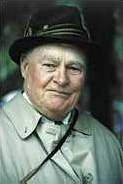
Ogden Phipps
Dell Hancock Photo
Ogden Phipps, arguably one of the greatest racehorse owners of all-time, passed away on April 22, at the age of 93.
His black colors with a cherry cap have been registered longer than most people have lived. They were carried to victory by many of the sport’s legends; Buckpasser, Easy Goer, Heavenly Prize, Personal Ensign and My Flag, just to name a few.
Phipps went to Harvard, was a Commander in the Navy during World War II and served as chairman of Bessemer Securities Corporation for twenty years.
A Hall of Fame tennis player, Phipps captured the U.S. Court Tennis Championship seven times and was the British Amateur champion in 1949.
For all his success on the racetrack, his finest accomplishment might have been creating a new generation of Thoroughbred owners, as he has passed his love of the game on to his sons Robert and Dinny and his daughter Cynthia. They will carry his flame for years to come.
No old family legacy to jump-start your operation? Read on.
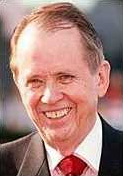
John C. Mabee
Anne Eberhardt Photo
John Mabee survived his first stroke and kept right on racing. The second one was fatal. He died on April 24 at the age of 80.
A sickly kid, born in Iowa, Mabee rode one of the family farm horses to the library in order to research a healthier place to live. Later, he moved to San Diego with his childhood sweetheart, Betty, and bought a small grocery store.
The store was successful enough to allow the Mabees to purchase a couple of cheap horses at the 1957 Del Mar Yearling Sale. This would be the beginning of Golden Eagle Farm, arguably the most successful Thoroughbred operation in the history of California racing.
Golden Eagle campaigned General Challenge, Excellent Meeting, Event of the Year, Dramatic Gold, Souvenir Copy and one of the greatest horses of all time, Best Pal.
So you see that hard work will get you to the top of this game, but there is another way to reach the pinnacle of success, marry somebody who loves horse racing.
Georgia Ridder was 87 when she was called to her heavenly reward on June 14. Mrs. Ridder and her newspaper-publishing husband, B.J. Ridder began racing in 1950.
Mr. Ridder soon began breeding Thoroughbreds.
“I can breed a better horse than I can buy,” he said.
The crown jewel of the Ridder breeding empire was Flying Paster. A magnificent racehorse, laden with talent and heart, who past these traits on in the breeding shed. He became a tremendous broodmare sire as well.
Georgia Ridder continued to race after her husband’s death in 1983, breeding an additional 15 stakes winners, although her most famous horse, 1996 Breeders Cup Classic winner, Alphabet Soup, was purchased privately.
Racing until the very end, Public Domain carried the distinctive cerise and green Ridder silks to a stakes victory at Hollywood Park shortly before Mrs. Ridder’s passing.
You’re a trillion to one to win “The Bachelor”? Open a donut shop.
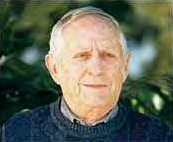
Verne H. Winchell
Stidham Photo Photo
Verne H. Winchell had a heart attack on November 26, after he had just finished his morning exercise regimen. He was 87.
Opening his donut shop in 1948, Winchell made enough money off the police force alone to launch a racing empire. He campaigned successful champions Mira Femme and Tight Spot, but my favorite horse to wear his maroon and white colors was the one he named after himself, Donut King.
Winchell was always loyal to his trainers. The late Cecil Jolly and Walter Greenman and most recently Hall of Famer Ron McAnally and Steve Asmussen all knew that they could count on nice horses to come their way from his Oakwind Farm near Lexington, Kentucky.
Although Valiant Nature, Olympio, Sea Cadet and Fleet Renee all won Grade 1 races for Winchell, his favorite day in racing was when he won five races on the card at Golden Gate Fields, with three of those victories provided by full sisters, an amazing and implausible feat.
There are exceptions to every rule, but it seemed impossible when I heard the news about “The Prince.”
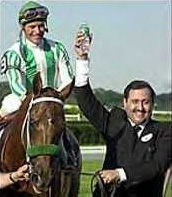
Prince Ahmed Salman
Prince Ahmed Salman, owner of The Thoroughbred Corp. and the most visible man in racing in 2002, died of heart failure on July 22 at the tender age of 43. The racing world was shocked.
His stable roster read like a litany of equine saints. Sharp Cat, Jewel Princess, Oath, Anees, Royal Anthem, Windsharp, Military, Fantastic Fellow, Dr. Fong, Sapphire Ring, Desert Hero, Officer, Habibti, Saudi Poetry, Crafty Friend, the amazing Spain, the fabulous Point Given and this year’s Kentucky Derby (G1) and Preakness (G1) winner War Emblem all carried the green and white stripes with distinction.
As you have read, we are used to people living what seems to be forever in our sport. There is an old racetrack axiom that says, “Nobody ever committed suicide with a good two-year-old in their barn.”
It is that hope for tomorrow that makes this game so alluring. It is what makes these heroes of our sport get up in the morning…every morning…to check the results in the sports section…to call their trainer for an update…to watch the workouts from Clocker’s Corner…to study the Form for this afternoon’s racing. I think it is what makes their ticker keep ticking.
When you thought of The Prince, you could picture him leading another champion into the Breeders’ Cup winners’ circle in 2042, at the age of 83, slightly paunchier, with graying hair and moustache and his trademarked smile. Alas, it is not to be. In life and in death, he was a racing rarity.
There are no guarantees in life or in racing but it seems to me that the odds are you will live longer if you own a runner rather than be one.

