
Clocking Is No Breeze
January 11th, 2004by Jude T. Feld
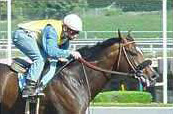
It’s been said, if you are too big to ride, not smart enough to train or too broke to own a horse, you can always become a clocker. This old racetrack axiom, perpetuated by racehorse trainers from coast to coast, illustrates the disdain most Thoroughbred conditioners have for the men and women armed with a stopwatch and a markings book.
For years, many believed a horse’s first start was the property of the owner and trainer. Training was often done on the farm and away from the eyes of rival stables and the betting public. Information on horses making their initial trip to the post and horses shipping in from other locales or foreign lands was virtually non-existent and trainers were not required to show workouts on their charges in order to run.
Owners and trainers benefited from this system, as only they were privy to their horse’s speed and form, often cashing sizeable wagers, leaving the average bettor in the dust.
As more and more people were exposed to the sport of Thoroughbred racing, newspapers and private publications known as “tout sheets” offered information to the bettor. Many of these included “selected workouts” from their “private clocker.”
Unlike the stock market, “inside information” is legal to use in racehorse wagering, so information on young horses and shippers is highly coveted. Many stables hire their own private clockers to scout the competition and spot sharp horses to claim or purchase.
Today’s racing aficionado has the benefit of a plethora of workout information available. Daily Racing Form, “America’s Turf Authority since 1894”, publishes the official times of an entrant’s most recent works, listing the rank of the work relative to the number of horses who trained at the same distance that day. The designations, “B” for breezing – a very easy work, “h” for handily – the horse being asked for a top effort, “d” for driving – a horse being asked for his best effort and “g” for gate – works from the gate and a standing start are typically a few ticks slower than works from the pole, are also listed. This can be vital information to the bettor.
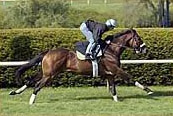
The men and women who supply this information are “association clockers.” They are hired by the racetrack to supply workout times to racing publications for the benefit of the betting public. At most major racetracks, there is usually a team of clockers, one serving as a “gap identifier,” and the others, stopwatches in hand, actually clocking the works.
Unlike the days of old, most trainers are willing to announce their horse’s works to the association clockers. In some states, it is required by law. When a horse enters the racetrack for a workout, usually the exercise rider or trainer will give the horse’s name to the gap identifier and state how far the horse is going to work and from what pole or from the gate. This information is passed on to the clockers, who are usually situated in the pressbox or some other location with an excellent view of the entire racetrack.
Most sharp, experienced clockers know the horses on the grounds by sight. However, if there is a question of a workers identity, a “markings book” is used. This book, often meticulously kept by hand, lists detailed markings – the white areas on a horse’s head and legs – for virtually every horse on the grounds. Clockers can spend several hours at the beginning of a race meeting, pouring over foal papers and listing markings in this valuable book.
Occasionally, a trainer will try to sneak a work by the clockers. He may change the color of saddle towel, ignore the gap identifier, give a false name or even work the horse in the dark to keep the clockers from posting an official time. Most of the time, these efforts prove futile, as the markings book will identify the worker, but sometimes the gap identifier will leave his post to follow the offender back to the barn and uncloak his real identity.
In today’s information age, Thoroughbred owners and trainers have access to workout information in real time through Equibase – Thoroughbred Racing’s Official Database, via their computers or Nextel phones. With most racing stables competing in several states, this quickly published information is welcomed. Owners know how far and how fast their stable stars worked even before their trainers can call them and trainers with far-flung operations can keep up with their charges throughout the morning no matter where they are running.
The men and women who supply this information are “association clockers.” They are hired by the racetrack to supply workout times to racing publications for the benefit of the betting public. At most major racetracks, there is usually a team of clockers, one serving as a “gap identifier,” and the others, stopwatches in hand, actually clocking the works.
Unlike the days of old, most trainers are willing to announce their horse’s works to the association clockers. In some states, it is required by law. When a horse enters the racetrack for a workout, usually the exercise rider or trainer will give the horse’s name to the gap identifier and state how far the horse is going to work and from what pole or from the gate. This information is passed on to the clockers, who are usually situated in the pressbox or some other location with an excellent view of the entire racetrack.
Most sharp, experienced clockers know the horses on the grounds by sight. However, if there is a question of a workers identity, a “markings book” is used. This book, often meticulously kept by hand, lists detailed markings – the white areas on a horse’s head and legs – for virtually every horse on the grounds. Clockers can spend several hours at the beginning of a race meeting, pouring over foal papers and listing markings in this valuable book.
Occasionally, a trainer will try to sneak a work by the clockers. He may change the color of saddle towel, ignore the gap identifier, give a false name or even work the horse in the dark to keep the clockers from posting an official time. Most of the time, these efforts prove futile, as the markings book will identify the worker, but sometimes the gap identifier will leave his post to follow the offender back to the barn and uncloak his real identity.
In today’s information age, Thoroughbred owners and trainers have access to workout information in real time through Equibase – Thoroughbred Racing’s Official Database, via their computers or Nextel phones. With most racing stables competing in several states, this quickly published information is welcomed. Owners know how far and how fast their stable stars worked even before their trainers can call them and trainers with far-flung operations can keep up with their charges throughout the morning no matter where they are running.
The men and women who supply this information are “association clockers.” They are hired by the racetrack to supply workout times to racing publications for the benefit of the betting public. At most major racetracks, there is usually a team of clockers, one serving as a “gap identifier,” and the others, stopwatches in hand, actually clocking the works.
Unlike the days of old, most trainers are willing to announce their horse’s works to the association clockers. In some states, it is required by law. When a horse enters the racetrack for a workout, usually the exercise rider or trainer will give the horse’s name to the gap identifier and state how far the horse is going to work and from what pole or from the gate. This information is passed on to the clockers, who are usually situated in the pressbox or some other location with an excellent view of the entire racetrack.
Most sharp, experienced clockers know the horses on the grounds by sight. However, if there is a question of a workers identity, a “markings book” is used. This book, often meticulously kept by hand, lists detailed markings – the white areas on a horse’s head and legs – for virtually every horse on the grounds. Clockers can spend several hours at the beginning of a race meeting, pouring over foal papers and listing markings in this valuable book.
Occasionally, a trainer will try to sneak a work by the clockers. He may change the color of saddle towel, ignore the gap identifier, give a false name or even work the horse in the dark to keep the clockers from posting an official time. Most of the time, these efforts prove futile, as the markings book will identify the worker, but sometimes the gap identifier will leave his post to follow the offender back to the barn and uncloak his real identity.
In today’s information age, Thoroughbred owners and trainers have access to workout information in real time through Equibase – Thoroughbred Racing’s Official Database, via their computers or Nextel phones. With most racing stables competing in several states, this quickly published information is welcomed. Owners know how far and how fast their stable stars worked even before their trainers can call them and trainers with far-flung operations can keep up with their charges throughout the morning no matter where they are running.
The men and women who supply this information are “association clockers.” They are hired by the racetrack to supply workout times to racing publications for the benefit of the betting public. At most major racetracks, there is usually a team of clockers, one serving as a “gap identifier,” and the others, stopwatches in hand, actually clocking the works.
Unlike the days of old, most trainers are willing to announce their horse’s works to the association clockers. In some states, it is required by law. When a horse enters the racetrack for a workout, usually the exercise rider or trainer will give the horse’s name to the gap identifier and state how far the horse is going to work and from what pole or from the gate. This information is passed on to the clockers, who are usually situated in the pressbox or some other location with an excellent view of the entire racetrack.
Most sharp, experienced clockers know the horses on the grounds by sight. However, if there is a question of a workers identity, a “markings book” is used. This book, often meticulously kept by hand, lists detailed markings – the white areas on a horse’s head and legs – for virtually every horse on the grounds. Clockers can spend several hours at the beginning of a race meeting, pouring over foal papers and listing markings in this valuable book.
Occasionally, a trainer will try to sneak a work by the clockers. He may change the color of saddle towel, ignore the gap identifier, give a false name or even work the horse in the dark to keep the clockers from posting an official time. Most of the time, these efforts prove futile, as the markings book will identify the worker, but sometimes the gap identifier will leave his post to follow the offender back to the barn and uncloak his real identity.
In today’s information age, Thoroughbred owners and trainers have access to workout information in real time through Equibase – Thoroughbred Racing’s Official Database, via their computers or Nextel phones. With most racing stables competing in several states, this quickly published information is welcomed. Owners know how far and how fast their stable stars worked even before their trainers can call them and trainers with far-flung operations can keep up with their charges throughout the morning no matter where they are running.The men and women who supply this information are “association clockers.” They are hired by the racetrack to supply workout times to racing publications for the benefit of the betting public. At most major racetracks, there is usually a team of clockers, one serving as a “gap identifier,” and the others, stopwatches in hand, actually clocking the works.
Unlike the days of old, most trainers are willing to announce their horse’s works to the association clockers. In some states, it is required by law. When a horse enters the racetrack for a workout, usually the exercise rider or trainer will give the horse’s name to the gap identifier and state how far the horse is going to work and from what pole or from the gate. This information is passed on to the clockers, who are usually situated in the pressbox or some other location with an excellent view of the entire racetrack.
Most sharp, experienced clockers know the horses on the grounds by sight. However, if there is a question of a workers identity, a “markings book” is used. This book, often meticulously kept by hand, lists detailed markings – the white areas on a horse’s head and legs – for virtually every horse on the grounds. Clockers can spend several hours at the beginning of a race meeting, pouring over foal papers and listing markings in this valuable book.
Occasionally, a trainer will try to sneak a work by the clockers. He may change the color of saddle towel, ignore the gap identifier, give a false name or even work the horse in the dark to keep the clockers from posting an official time. Most of the time, these efforts prove futile, as the markings book will identify the worker, but sometimes the gap identifier will leave his post to follow the offender back to the barn and uncloak his real identity.
In today’s information age, Thoroughbred owners and trainers have access to workout information in real time through Equibase – Thoroughbred Racing’s Official Database, via their computers or Nextel phones. With most racing stables competing in several states, this quickly published information is welcomed. Owners know how far and how fast their stable stars worked even before their trainers can call them and trainers with far-flung operations can keep up with their charges throughout the morning no matter where they are running.

