
SOUTHERN CALIFORNIA’S FREQUENT FLYING JOCKEYS MIX AIRPOWER WITH HORSEPOWER
July 30th, 2008By Gene Williams
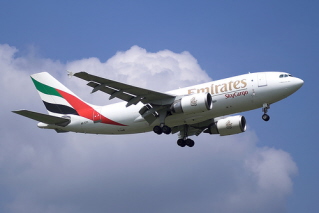
Fear of flying is not an option for jockeys these days when the call comes to ride a good horse in a big race. They go — and if things work out right they fly home on Cloud 9.
Cross-country flying and even intercontinental flight has become routine for the sport’s leading riders and Del Mar-based Aaron Gryder, Mike Smith and Alex Solis are no exceptions. Each would probably need at least both hands to count the jockeys’ rooms in which they’ve prepared for races. Each has an active passport, also, to get from country to country.
In the post-9/11 era, Smith says, “You have to have all your documents in order if you’re going to get around. You’d better have all the I’s dotted and all the T’s crossed or you won’t get to go where you want to go.”
And what about carrying whips on a flight? “I don’t carry one any more. I just borrow one when I get to my next track,” Smith says.
Of the three, Gryder believes he has the corner on frequent flier miles, partly by virtue of his frequent travels while based in the Midwest and New York and partly because he has made numerous trips to the Middle East to ride in Dubai and Saudi Arabia.
“In the Midwest or on the East Coast there are several tracks within a couple of hundred miles, so you do a lot more flying than you do here,” Gryder said. “There have been times where I would be gone for three weekends in a row because I might have more stakes business than I had day-to-day business. Because of that, it was all right for me to go out of town and try and make my weeks on those weekends.”
He acknowledges that it was tiring at times, but also fun and eventful. “I was doing it when I was younger — in the Midwest in my 20s,” he said. “I enjoyed it and I was meeting new people. Now, because of all the travels, I think I can go anywhere in the country and say I’ve got some clients.”
Gryder’s travels to Saudi Arabia began while he was based in New York, thanks to his friendship with trainer Jerry Barton, brother of well-known former jockey and current broadcaster Donna Barton Brothers. From New York, the flight time is about 16 hours each way. Gryder has made the trip since coming to California, also, and that requires about 21 hours of flying each way.
An advantage Gryder believes he has over most fliers is a lack of jet lag. “I’ve always been fortunate to be able to rest on planes,” he said. “I can land and be right on their time schedule and it’s never affected me.”
In another example, Gryder said, “One time last year, I rode on a Sunday, left on Sunday night with Ron Charles (president of Santa Anita) and Richie Migliore, then flew all night to Australia to check on racing surfaces. You lose a day going, but you get it back on the return. So we still made it back Wednesday morning to ride races.
“People don’t see you for a couple of days and they think you’ve just had days off, and, instead, you’ve been to Australia to ride at three different racetracks (to test surfaces) and then come back to ride on Wednesday on your home track.”
What has impressed Gryder most in his travels is how Mideast rulers react to equine athletes. “They call this the sport of kings and when you go over there you see that it is for the kings,” Gryder said. “I talk to princes and kings just like you’d talk to anybody (here at home) when you’re talking horses. They’re like watching children when they watch their horses.
“It’s fun to see what an animal can do for all of us. These horses bring great joy to all of us. It can change country leaders and world leaders into children.”
Despite what some horsemen have been known to say, jockeys don’t always fly first class. But when comfort and the chance to sleep are factors on intercontinental flights, first class definitely is an option often taken. “But if the tickets are too high, I try to do the right thing by the owner,” Gryder said.
Gryder recalls one of his most frustrating flying moments as an aborted trip to ride for trainer D. Wayne Lukas in the Remington Derby at Oklahoma City’s Remington Park. “On my way, there was to be a short layover — maybe 20 minutes or so — and I didn’t have to change planes,” Gryder remembered. “But as time went on, I began to get a little edgy and finally they came and said I’d have to get off the plane because there weren’t enough passengers to send the plane to Oklahoma.
“My question, of course, was didn’t they know that before they started? Anyway, I couldn’t get another flight that would get me there in time for the race, so I had to return to home base. I lost the mount, I upset my clients and I had to eat the airline fare.
“How can I bill someone that I didn’t even show up to ride for? So I ate the air fare, because it was only the right thing to do.”
For Solis, flying from west to east is tough, mostly because of jet lag. He deals with it by finding a place to exercise, as he does on a regular basis. “That’s the way I get rid of jet lag. Then I can take a nice nap and get ready to ride.”
One factor that all three riders agree on is, as Solis said, “When you travel, generally, it’s because you’re going to ride a good horse in a big race. When you win, there are big rewards.”
Smith expands it a bit with his trademark smile by saying, “When you win, it makes the trip back real nice. You may count the hours, but, also, you can count the money.”
Thinking of cross-country flight, Smith said, “It’s a lot easier going east to west, than the other way. If you’re in the east, you can get on a plane about nine in the morning and get out here around noon, and then get to the track and ride.
“Now that I’m out here, I’m a little choosier about travel.”
Smith also can tell a horror story, whereas his two compatriots say they haven’t experienced anything like his adventure. Several years ago, Smith said, he and fellow jockey Jerry Bailey were flying back from racing in Japan when a severe storm struck over the Pacific Ocean.
“It was a very rough flight, rougher than anything either Jerry or I had ever experienced,” Smith said. “I remember one of the passengers broke his arm when he flew up out of his seat and he used his arm to keep from hitting the ceiling. That’s how rough it was; how far we dropped when we hit the rough weather. It was that way all the way across the Pacific. There were times when I wasn’t sure we were going to make it.”

